
When a stroke happens, blood flow to part of the brain is cut off. This causes damage to brain cells, which can result in:
Paralysis or weakness (often one side of the body)
Difficulty speaking or understanding speech
Memory and thinking problems
Trouble walking or doing daily tasks
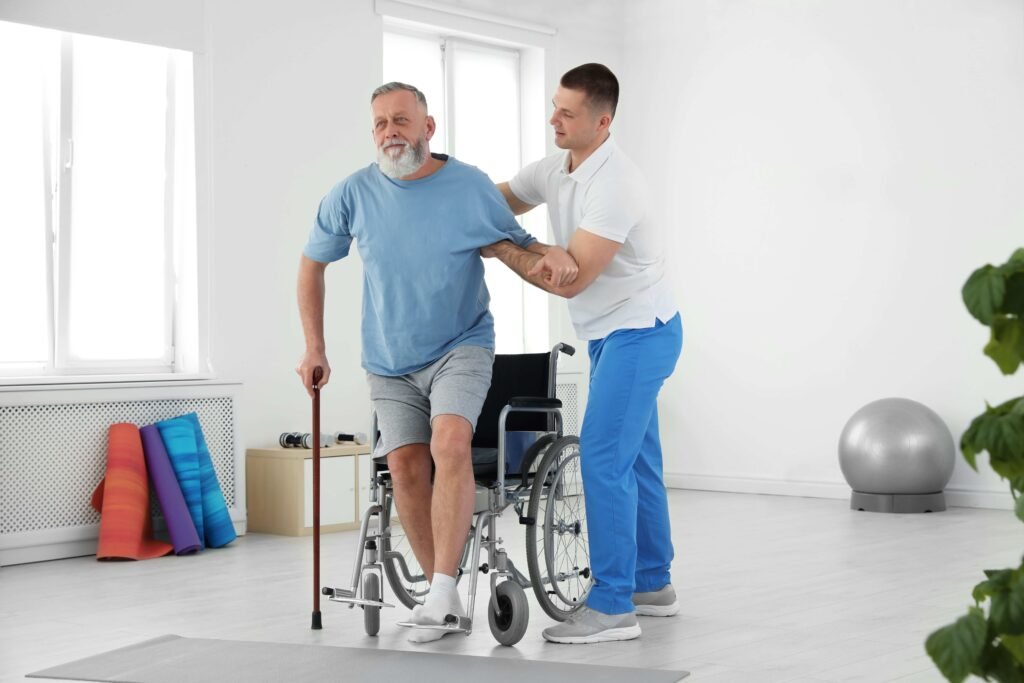
Stroke therapy helps the brain rebuild neural connections through rehabilitation — this is called neuroplasticity.
Physiotherapy (Movement Recovery)
Helps patients regain strength, balance, and coordination. Exercises improve walking and arm/leg movement.
Occupational Therapy (Daily Activities)
Focuses on skills like dressing, eating, and using hands again. Patients learn to adapt and function independently.
Speech & Language Therapy
Helps restore the ability to speak, understand, read, and write. Also supports swallowing problems.
Electrotherapy & Robotic Assistance
Machines like Bioness, Stroke Rehab Units, and Magnetic Stimulation assist in activating weak muscles and retraining the brain.
Stroke therapy is usually done in phases:
Early Stage (Hospital) – Passive movement and basic recovery begin.
Sub-Acute Stage (Rehab Center or Home) – Focus on rebuilding strength and skills.
Long-Term Care – Continued therapy to improve quality of life.
Speeds up recovery
Improves movement and independence
Reduces risk of future strokes
Restores confidence and emotional well-being
We understand that when you’re living with chronic pain, waiting any longer simply isn’t an option. That’s why we offer prompt appointments, Monday to Saturday from 9:00 AM to 04:00 PM, at our pain center — so you can begin your journey toward lasting pain relief as soon as tomorrow.
We’re here to provide the care you need
10.00 am – 04.00 pm
Copyright © 2024 alshifagroupofhospital. All rights reserved.